
How to tell if you're a safe person
Most people want to be a safe person. But safety isn't something we decide about ourselves. It's something other people experience when they're around us. This resource helps you reflect on whether people feel safe around you.
Why this matters
The quality of our relationships often depends on how safe people feel around us. When people feel safe, they're more likely to:
Tell us the truth.
Raise concerns early.
Set boundaries.
Admit mistakes.
Ask for help.
Disagree respectfully.
When people don't feel safe, they often stay quiet, avoid difficult conversations, or tell us what they think we want to hear. That might feel easier in the short term, but it rarely leads to healthy relationships. Over time, people may start to distance themselves, which can leave you feeling lonely, isolated and wondering why people don’t stay.
Signs You Might Be a Safe Person
You Listen to Understand
Safe people don't rush to solve every problem. They make space for other people to talk about their issues, process their feelings, and share their experiences without immediately jumping to provide advice or defend themselves.
Ask yourself: Do I listen to understand, or listen to respond or defend?
You Respect Boundaries
When someone says no, asks for space or changes their mind, you respect it. You might feel disappointed, but you don't pressure, guilt, or punish them for being honest.
Ask yourself: Do people feel comfortable saying no to me?
You Can Be Trusted
People know where they stand with you. You don't use private conversations as social currency, and you don't rely on gossip to build connections with people. Trust grows when people know their vulnerability is safe with you.
Ask yourself: Would people trust me with something sensitive?
You Take Responsibility
Safe people aren't perfect. They make mistakes like everyone else. The difference is, before anyone has to say anything, they're willing to own those mistakes, apologise when needed, and repair relationships when harm has been caused.
Ask yourself: How do I react when someone tells me I've hurt them or made a mistake?
Your Actions Match Your Words
One of the strongest indicators of safety is consistency. People feel safer when your behaviour is predictable, your actions align with your words, and they don't have to guess which version of you they're going to get.
Ask yourself: Can people rely on my words and actions aligning?
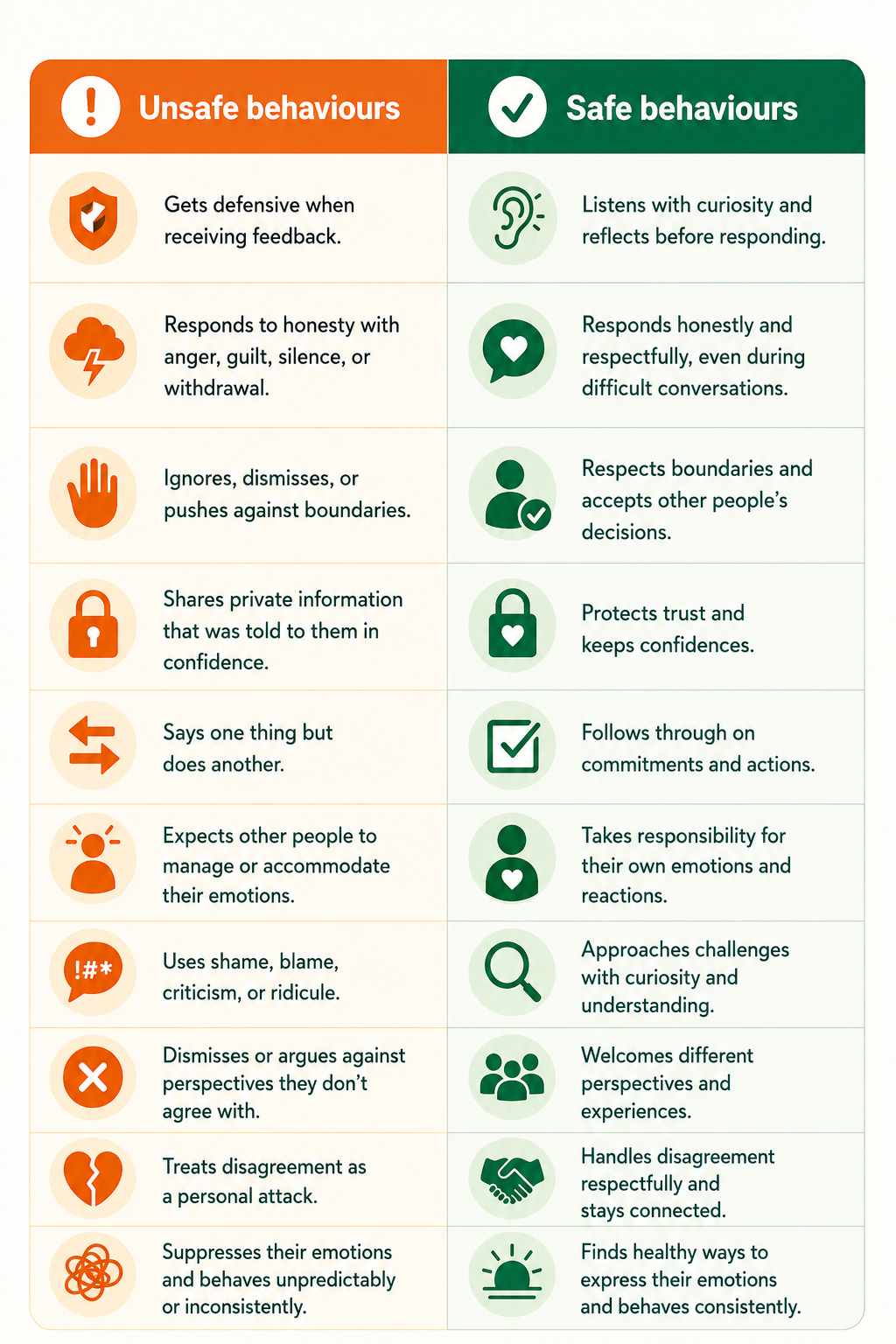
Understanding the difference between safe and unsafe behaviours
People rarely decide someone is unsafe because of one or two mistakes. More often, it's a pattern of behaviour that makes them feel they need to be careful, guarded, or manage the other person's reactions.
It is important to remember that everyone is doing the best they can with the tools they were given when they were young. BUT… while you are not to blame for what happened to you then, you are responsible for your behaviours and reactions now.
The following list provides you with some of the behaviours that build trust and behaviours that erode it.
REMEMBER!
Being a safe person isn't something you achieve once. It's something you practise. People decide whether they feel safe with us based on our repeated actions, not our intentions.
Like trust, safety is built through consistency. It grows when people know what to expect from you, trust that you'll treat them with respect, and feel confident they can be honest without being punished for it.
The goal isn't perfection.
The goal is becoming someone people can be themselves around.
One last thing…
Being a safe person does not mean everyone will open up to you.
Sometimes people stay quiet because they are afraid of conflict. Sometimes they have been hurt before. Sometimes they simply aren't ready.
Not everyone is ready to be honest about how they feel, and that's okay. All you can do is show up in a way that makes honesty feel safe. How they respond is up to them.
Keep showing up with curiosity, consistency, and respect.
The people who are ready will notice.
Want to learn more?
Explore more practical tools for communication, boundaries and respectful relationships in the Lu Helpful Tips collection.
Lu is also developing a practical guide with more tools, examples and support around everyday communication, boundaries and respectful relationships. Join our email list for updates and early access when it becomes available.
Need support now?
If you or someone else needs support now, consider reaching out to these services to talk to someone.
Lifeline - 24/7 confidential support: 13 11 14 or visit www.lifeline.org.au
Kids Helpline - Confidential 24/7 counselling service for anyone aged 5 to 25. Call 1800 55 1800 or visit kidshelpline.com.au.
13 YARN - National crisis support line for mob who are feeling overwhelmed or having a hard time: 13 92 67
Q Life - Anonymous and free LGBTQIA+ peer support and referral: 1800 184 527
MensLine - Free telephone and online counselling for men anywhere, anytime: 1300 789 978 or visit mensline.org.au
1800RESPECT - Sexual assault, domestic or family violence support: 1800 737 732 or visit 1800respect.org.au
