Good leadership is built in everyday moments
READ IT
Read It is a set of short, free guides for anyone who manages people in their workplace.
Each one covers a problem that comes up in most workplaces. We explain what could be causing the problem, give you the exact words you can use and offer one thing to try right away.
Each one takes about 5 minutes to read.
Read it. Try it. See what changes.
Choose your workplace
Pick the set of guides that best matches how your team works. The issues are the same in both.
The examples, the language and the format are different.
Office and hybrid workplaces
For managers and team leaders working mainly in offices, remotely or across hybrid teams. Common in government, corporate, not-for-profit, engineering and professional services.
Site and shift workplaces
For supervisors and team leaders working across sites, shifts, crews and operational environments. Common in construction, healthcare, mining, trades and field teams.
What is ‘Read It’
You may have stepped into leadership because you’re good at what you do.
You know the work. You understand the pressure. You’ve built experience in your field. But leading people asks for a different set of skills.
A good leader needs to be able to:
Communicate clearly so people know what is expected, why it matters and what happens next.
Build trust by listening properly, responding and doing what they say they will do.
Have difficult conversations in a way that leaves people clear on where they stand, what needs to change and how.
Make fair decisions and explain how they got there.
Balance priorities so people know what matters most when everything can’t be done at once.
Give useful feedback so people know what is working, what needs to change and what good looks like.
Help people grow by giving them responsibility, support and opportunities to learn.
Use good judgement, make decisions and know when something needs to be escalated.
Those skills don’t always come automatically with experience.
Read It is designed to help you build them in the moments you’re already dealing with at work.
Each guide focuses on one common situation, gives you practical words to use, suggests one thing to try and helps you check whether it made a difference.
You don’t need to read everything.
Start with the situation that feels most useful to you right now.
Who ‘Read It’ is for
-
You've got the job but nobody handed you the words. These give you sentences you can use before you're in the middle of it.
-
You know what you're doing. These are for the things that still take up your time. Work that comes back wrong, jobs that keep getting added, the same two people carrying the team.
-
The site and shift guides are written to be used on the job, in a toolbox or pre-start.
-
Something short and useful you can send to a manager today, while the bigger piece of work is still being sorted out.
What topics are covered
How ‘Read It’ works
-
Pick your workplace type and the situation most relevant to you.
Each guides takes about five minutes to read.
-
Use the words in a real conversation, and try the one change the guide suggests.
-
Come back in two weeks and use the check at the end of the guide. If it helped, keep doing it.
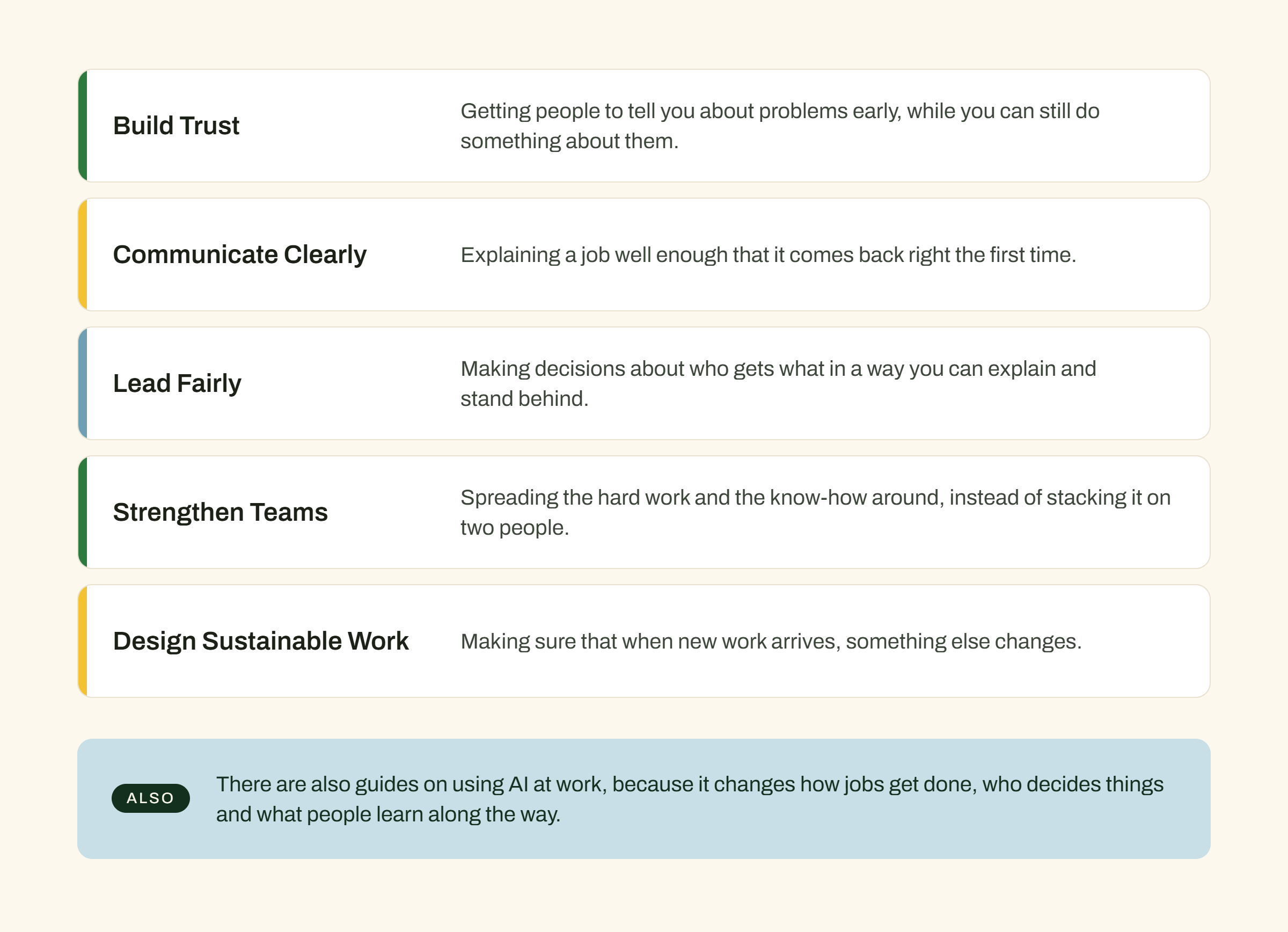
The guides are grouped into five categories to make it easier to find the right support for the issues you are looking to resolve.