
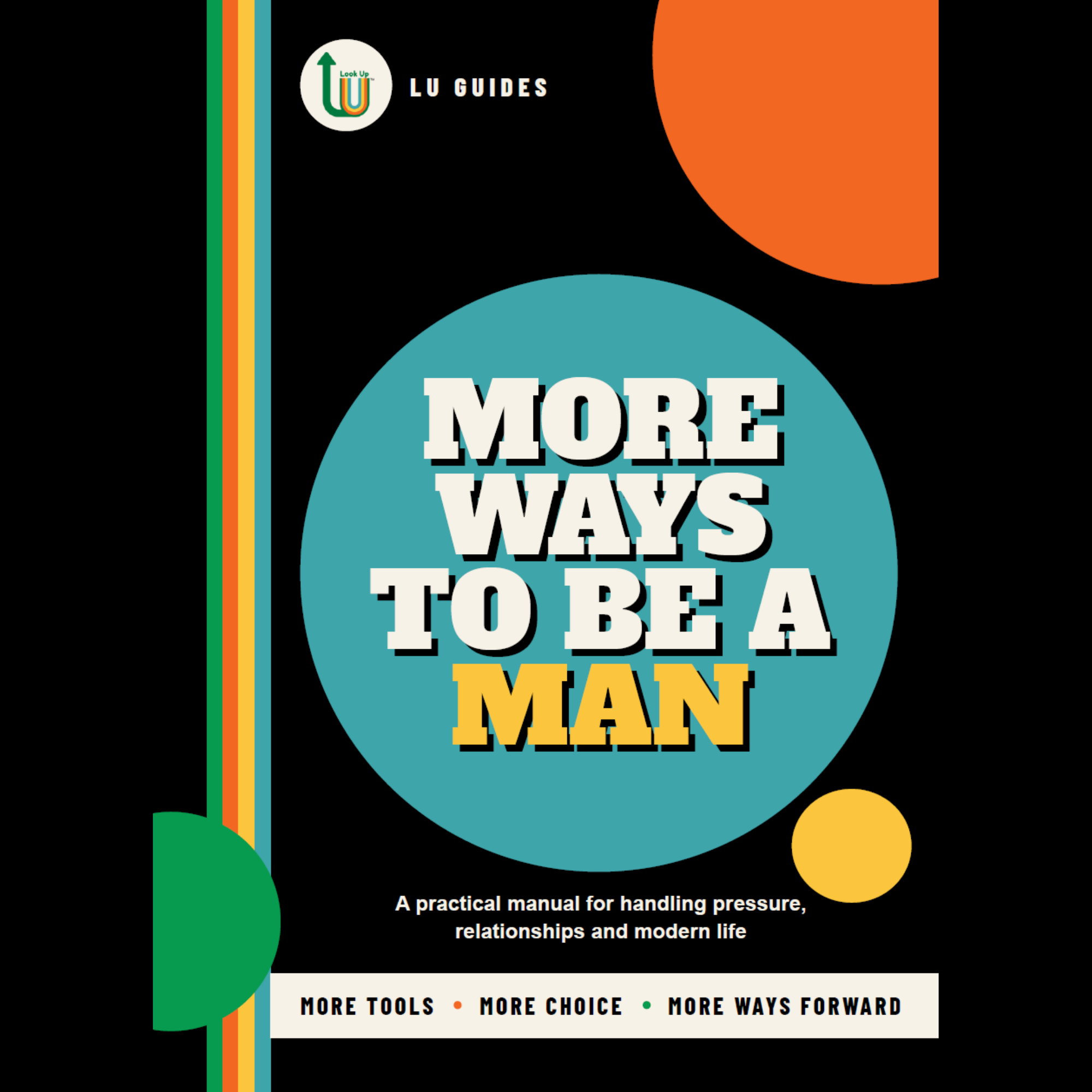

MORE TOOLS. MORE CHOICE. MORE WAYS FORWARD.
Be strong. Sort it out yourself. Push through. Provide. Know what to do.
Most men grew up with these lessons. They can be useful, but when they're the only tools you've got, they start to cost you.
WHAT'S INSIDE
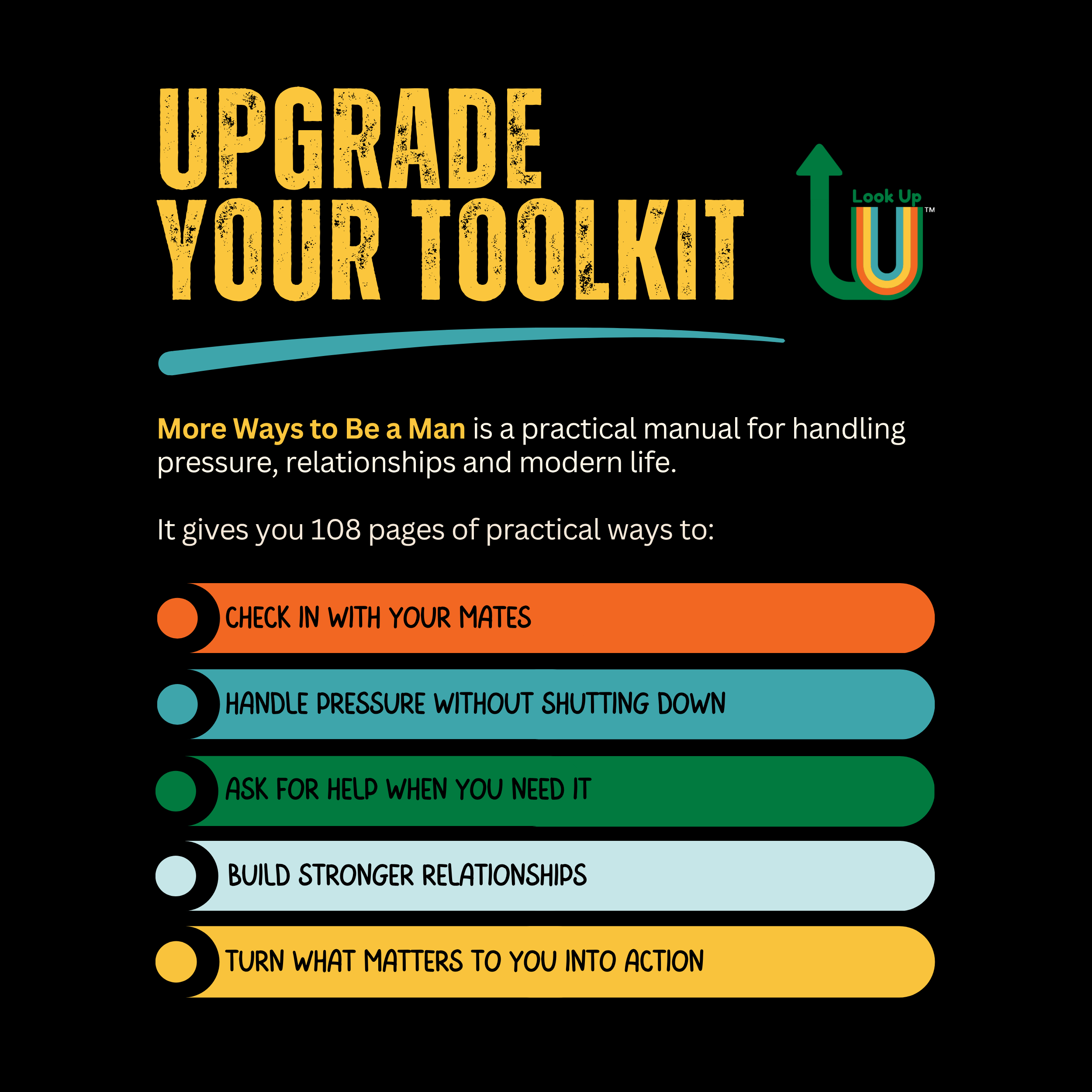
108 pages of practical activities, examples and scripts to help you:
Work out what matters to you
Handle pressure before it takes over
Know when to reach out, and how
Communicate more clearly
Set and respect boundaries
Handle conflict and rejection
Build stronger friendships and relationships
Take responsibility and repair mistakes
Turn your values into everyday actions
USE IT YOUR WAY
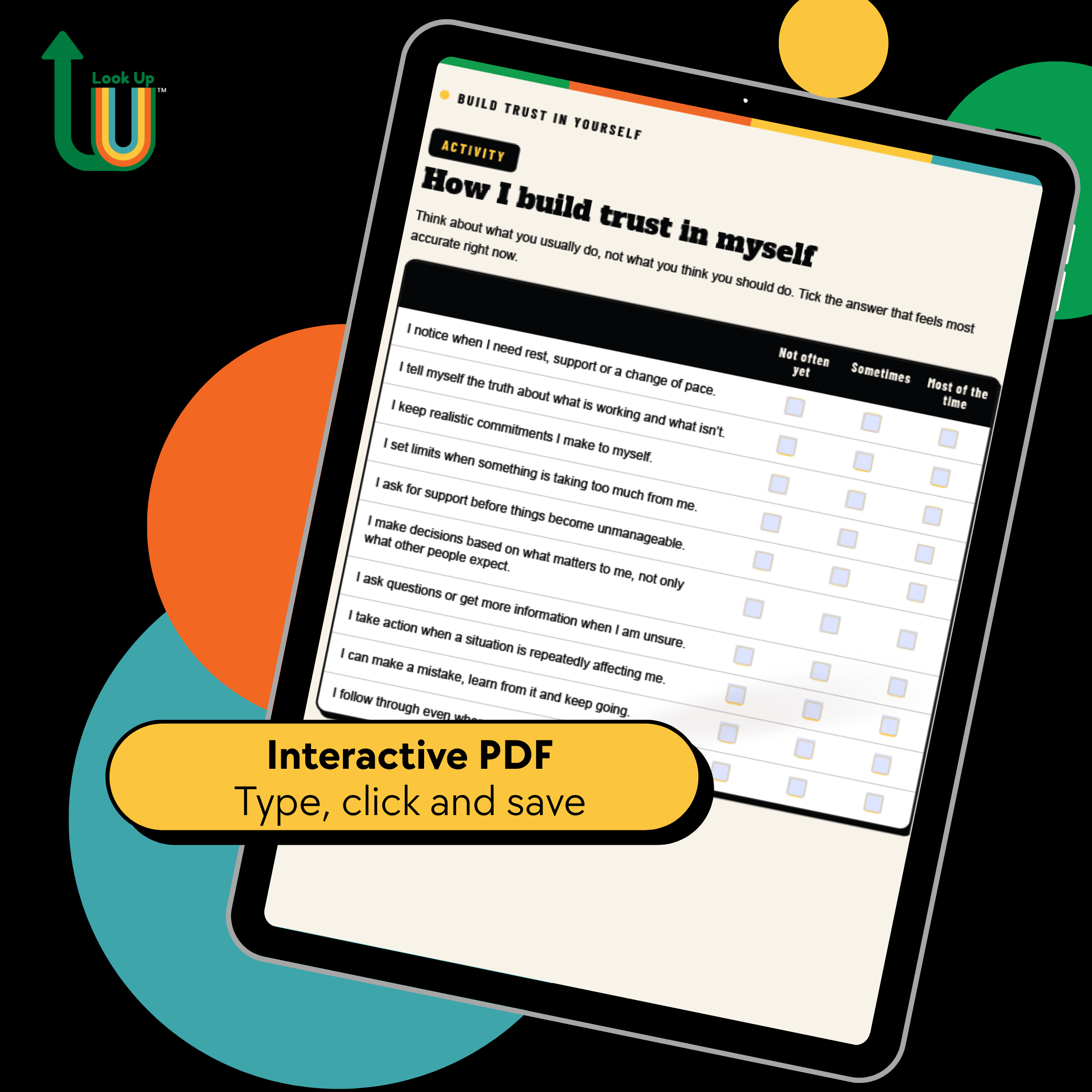
It's an interactive PDF you download. Type your answers in and save them, or print it and use a pen. A notebook, voice notes or talking it through with someone you trust all work too. Start with whatever part you need.
SOUND FAMILIAR?
It's been a big week. Work's flat out and you're carrying more than you're letting on. Someone asks how you're going and you say "fine." Then something small happens at home and you snap. Afterwards you're left wondering where that came from.
More Ways To Be A Man helps you notice that build-up earlier and gives you something else to reach for. It's not about changing who you are. It's about having more options when life gets complicated.
BUILT FOR REAL LIFE
It draws on research, men's lived experience, professional expertise and consultation, and turns it into simple tools you can use straight away. No lectures, and no one-size-fits-all version of masculinity.
TRY IT FIRST
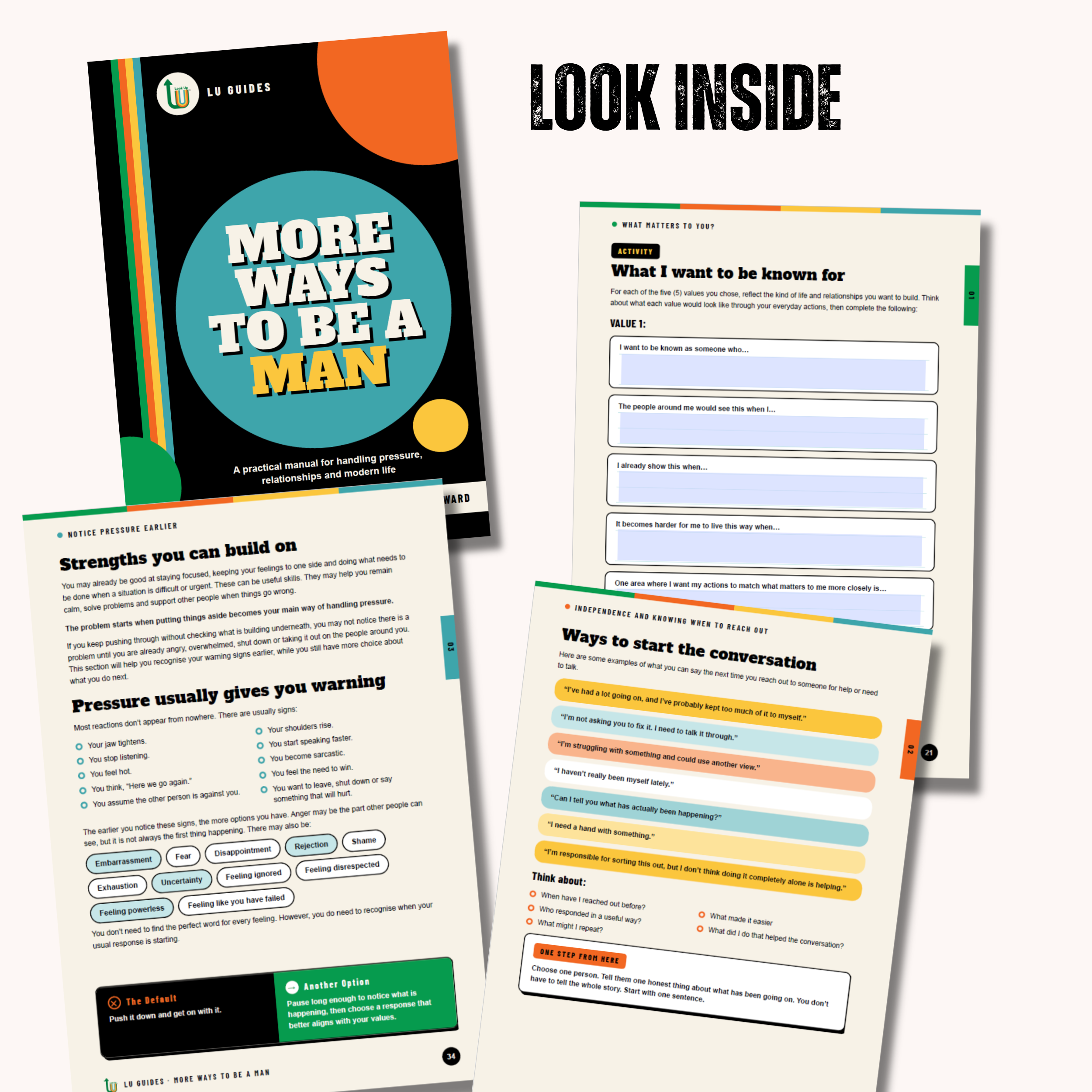
Not sure yet? Get Notice Pressure Earlier, a free part of the guide.
WHERE YOUR MONEY GOES
30% of profits from every guide sold goes directly back into developing more resources and events. Over time, this will fund in-person community events where people can come together and share their experiences, plus new guides people ask for.
MORE TOOLS. MORE CHOICE. MORE WAYS FORWARD.
Be strong. Sort it out yourself. Push through. Provide. Know what to do.
Most men grew up with these lessons. They can be useful, but when they're the only tools you've got, they start to cost you.
WHAT'S INSIDE
108 pages of practical activities, examples and scripts to help you:
Work out what matters to you
Handle pressure before it takes over
Know when to reach out, and how
Communicate more clearly
Set and respect boundaries
Handle conflict and rejection
Build stronger friendships and relationships
Take responsibility and repair mistakes
Turn your values into everyday actions
USE IT YOUR WAY
It's an interactive PDF you download. Type your answers in and save them, or print it and use a pen. A notebook, voice notes or talking it through with someone you trust all work too. Start with whatever part you need.
SOUND FAMILIAR?
It's been a big week. Work's flat out and you're carrying more than you're letting on. Someone asks how you're going and you say "fine." Then something small happens at home and you snap. Afterwards you're left wondering where that came from.
More Ways To Be A Man helps you notice that build-up earlier and gives you something else to reach for. It's not about changing who you are. It's about having more options when life gets complicated.
BUILT FOR REAL LIFE
It draws on research, men's lived experience, professional expertise and consultation, and turns it into simple tools you can use straight away. No lectures, and no one-size-fits-all version of masculinity.
TRY IT FIRST
Not sure yet? Get Notice Pressure Earlier, a free part of the guide.
WHERE YOUR MONEY GOES
30% of profits from every guide sold goes directly back into developing more resources and events. Over time, this will fund in-person community events where people can come together and share their experiences, plus new guides people ask for.